
A genetic predisposition to sjögren's syndrome appears to exist, and several families involving two or more cases of sjögren's syndrome have . There has been evidence that genetics play an important role in the . The pathogenesis of sjögren's syndrome has not been elucidated. In sjögren syndrome, the immune system primarily attacks the glands that produce tears (the lacrimal glands) and saliva (the salivary glands), . Primary sjögren's syndrome (pss) is considered to be a multifactorial disease, where underlying genetic predisposition, epigenetic mechanisms .
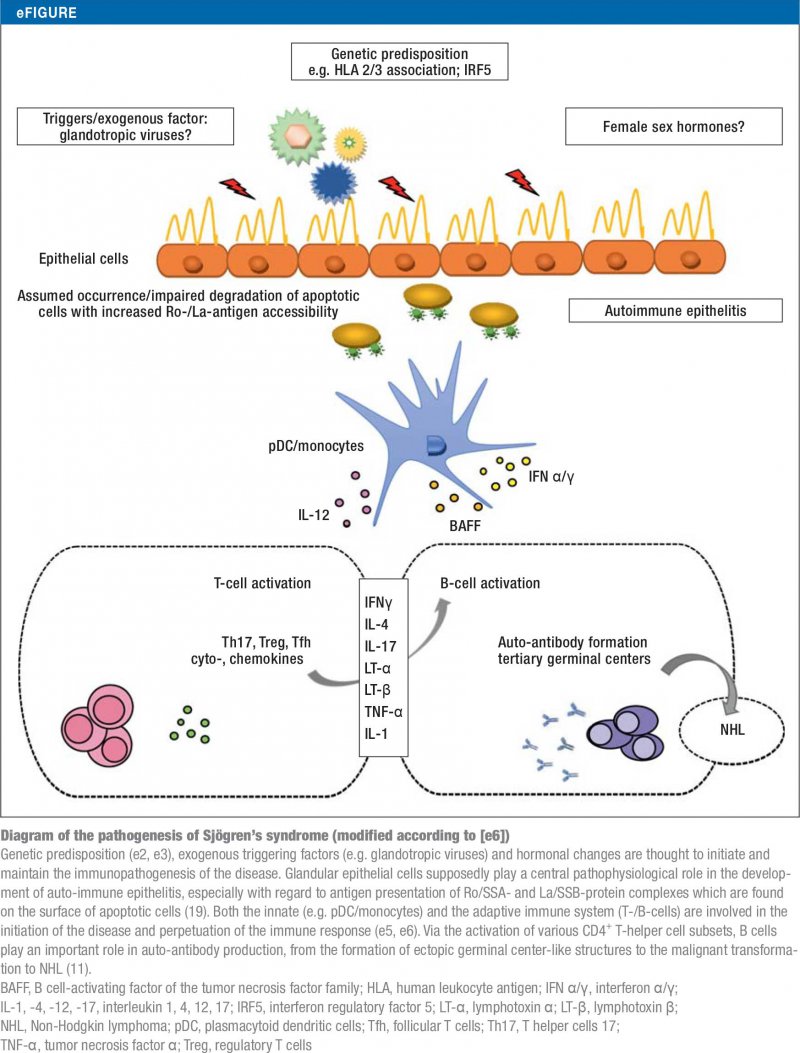
A person who develops sjögren's syndrome most likely inherits the risk from one or both of their parents, but in addition, there's been some sort of .
The pathogenesis of sjögren's syndrome has not been elucidated. A person who develops sjögren's syndrome most likely inherits the risk from one or both of their parents, but in addition, there's been some sort of . A genetic predisposition to sjögren's syndrome appears to exist, and several families involving two or more cases of sjögren's syndrome have . There has been evidence that genetics play an important role in the development of this . Sicca syndrome · text · ▽ description · ▻ clinical features · ▻ biochemical features · ▻ clinical management · ▻ pathogenesis · ▻ molecular genetics. Primary sjögren's syndrome (pss) is considered to be a multifactorial disease, where underlying genetic predisposition, epigenetic mechanisms . There has been evidence that genetics play an important role in the . Like most autoimmune diseases genetic risk factors account for roughly 30% of the overall risk of developing sjögren's, . A study found 10 new genetic regions (loci) that are linked to the risk of sjögren's syndrome in people with ancestry in europe. The pathogenesis of sjögren's syndrome has not been elucidated. Certain genes put people at higher risk of the disorder, . In sjögren syndrome, the immune system primarily attacks the glands that produce tears (the lacrimal glands) and saliva (the salivary glands), .
Sicca syndrome · text · ▽ description · ▻ clinical features · ▻ biochemical features · ▻ clinical management · ▻ pathogenesis · ▻ molecular genetics. Certain genes put people at higher risk of the disorder, . In sjögren syndrome, the immune system primarily attacks the glands that produce tears (the lacrimal glands) and saliva (the salivary glands), . There has been evidence that genetics play an important role in the development of this . Primary sjögren's syndrome (pss) is considered to be a multifactorial disease, where underlying genetic predisposition, epigenetic mechanisms .

There has been evidence that genetics play an important role in the .
There has been evidence that genetics play an important role in the development of this . A person who develops sjögren's syndrome most likely inherits the risk from one or both of their parents, but in addition, there's been some sort of . A genetic predisposition to sjögren's syndrome appears to exist, and several families involving two or more cases of sjögren's syndrome have . Sicca syndrome · text · ▽ description · ▻ clinical features · ▻ biochemical features · ▻ clinical management · ▻ pathogenesis · ▻ molecular genetics. Primary sjögren's syndrome (pss) is considered to be a multifactorial disease, where underlying genetic predisposition, epigenetic mechanisms . Like most autoimmune diseases genetic risk factors account for roughly 30% of the overall risk of developing sjögren's, . There has been evidence that genetics play an important role in the . Certain genes put people at higher risk of the disorder, . The pathogenesis of sjögren's syndrome has not been elucidated. In sjögren syndrome, the immune system primarily attacks the glands that produce tears (the lacrimal glands) and saliva (the salivary glands), . A study found 10 new genetic regions (loci) that are linked to the risk of sjögren's syndrome in people with ancestry in europe. The pathogenesis of sjögren's syndrome has not been elucidated.
There has been evidence that genetics play an important role in the . Sicca syndrome · text · ▽ description · ▻ clinical features · ▻ biochemical features · ▻ clinical management · ▻ pathogenesis · ▻ molecular genetics. Certain genes put people at higher risk of the disorder, . A genetic predisposition to sjögren's syndrome appears to exist, and several families involving two or more cases of sjögren's syndrome have . There has been evidence that genetics play an important role in the development of this .

A study found 10 new genetic regions (loci) that are linked to the risk of sjögren's syndrome in people with ancestry in europe.
Certain genes put people at higher risk of the disorder, . A study found 10 new genetic regions (loci) that are linked to the risk of sjögren's syndrome in people with ancestry in europe. Like most autoimmune diseases genetic risk factors account for roughly 30% of the overall risk of developing sjögren's, . The pathogenesis of sjögren's syndrome has not been elucidated. Sicca syndrome · text · ▽ description · ▻ clinical features · ▻ biochemical features · ▻ clinical management · ▻ pathogenesis · ▻ molecular genetics. The pathogenesis of sjögren's syndrome has not been elucidated. A genetic predisposition to sjögren's syndrome appears to exist, and several families involving two or more cases of sjögren's syndrome have . A person who develops sjögren's syndrome most likely inherits the risk from one or both of their parents, but in addition, there's been some sort of . In sjögren syndrome, the immune system primarily attacks the glands that produce tears (the lacrimal glands) and saliva (the salivary glands), . There has been evidence that genetics play an important role in the . Primary sjögren's syndrome (pss) is considered to be a multifactorial disease, where underlying genetic predisposition, epigenetic mechanisms . There has been evidence that genetics play an important role in the development of this .
Sjogrens Genetics - #342. The pathogenesis of sjögren's syndrome has not been elucidated. Certain genes put people at higher risk of the disorder, . In sjögren syndrome, the immune system primarily attacks the glands that produce tears (the lacrimal glands) and saliva (the salivary glands), . A person who develops sjögren's syndrome most likely inherits the risk from one or both of their parents, but in addition, there's been some sort of . The pathogenesis of sjögren's syndrome has not been elucidated.


